
Castle Tickets and Their Official Price: Neuschwanstein Is €21, and the Page Above It Asks €35
Three castles, two prices each, read within the same hour. Neuschwanstein, Chenonceau and Bran against the pages that outrank them for their own names. The gap runs from about half as much again to a little over double, and the children's fares are where it widens.
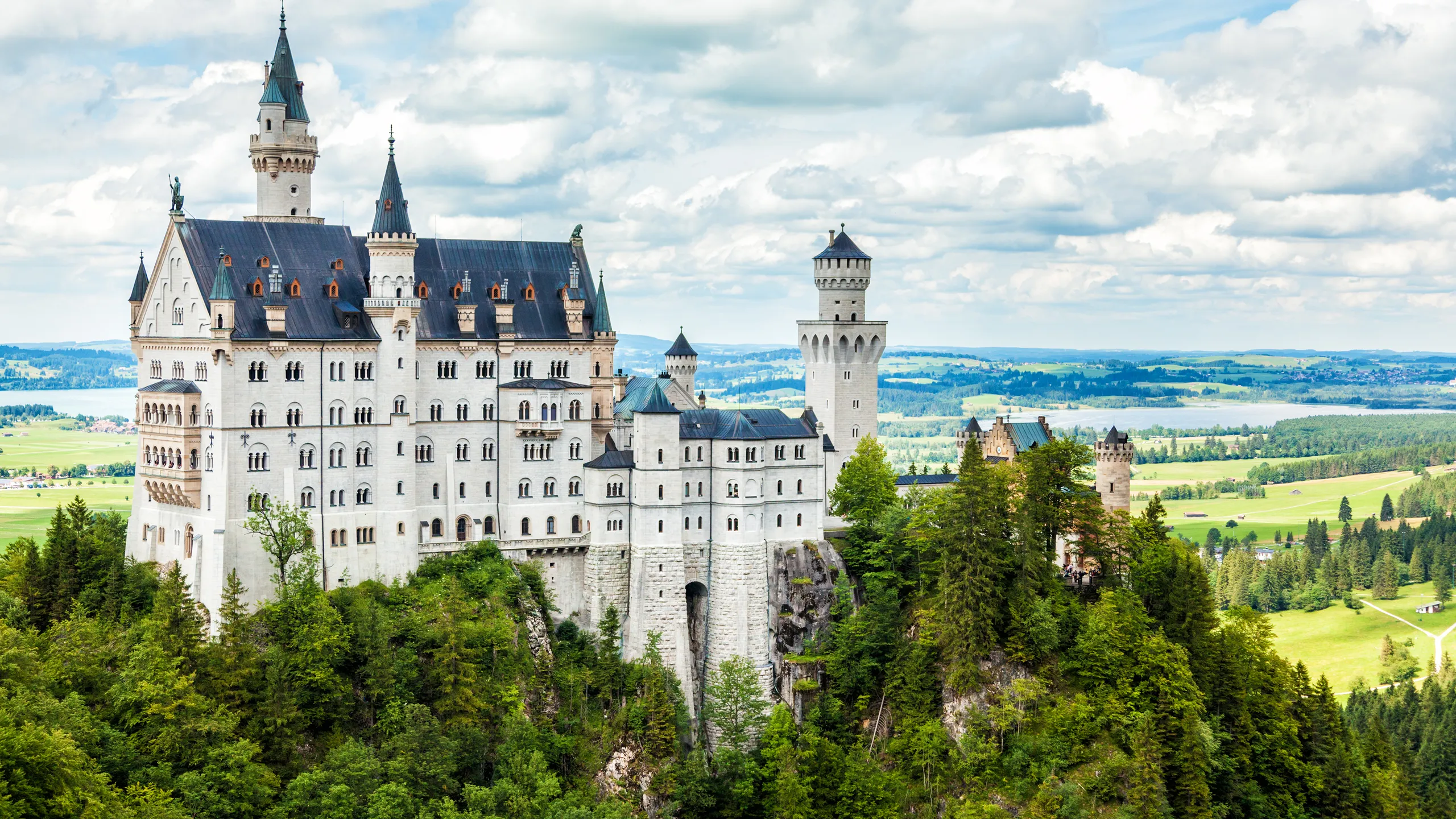
Castle tickets have an official price, set and published by whoever owns the castle, and it is usually the easiest number in travel to find. It is also, on the evidence of this morning, not the number most people end up paying. We took three castles that sit in this catalogue, opened the page the monument itself publishes, then opened a page that sells the same entry and is not the monument. Both figures below were read on 7 October 2026, within the same hour.
The gap is real but it is smaller than the folklore suggests, and it runs in a narrower band than we expected: between about half as much again and a little over double. Nobody in this story is selling a forgery. The tickets work. What is being sold alongside them is convenience, and the question worth asking is what convenience costs, which is a question you can only answer if you know both prices.
The castle tickets official price, three times over
Three monuments, three owners, three completely different pricing cultures. A German state administration, a French family company, and a Romanian castle running its own shop. The only thing they have in common is that each one publishes its fares in plain sight, and each one is outranked for its own name by somebody who does not.
| Monument | Who sets the price | Adult, from the monument | Adult, asked elsewhere | The multiple |
|---|---|---|---|---|
| Neuschwanstein | Bavarian Palace Administration, sold through the Ticket Center Hohenschwangau | €21.00, plus a €2.50 service fee | From €35.00 | About 1.5x |
| Chenonceau | S.A.S. Château de Chenonceau, privately owned | €19.00 with the guide leaflet, €24.00 with the audio guide | €40.00 | About 2.1x |
| Bran Castle | The castle's own administration | 100 lei | €42.00 | About 2.2x |
| Children | Free at Neuschwanstein under 18; €15.00 at Chenonceau for 7 to 18; 40 lei at Bran for 5 to 17 | €30.00 at Chenonceau for 7 to 18; €21.00 at Bran for 5 to 17 | Up to 2x |
Two of those multiples deserve a caveat before anyone quotes them. The Bran comparison crosses a currency: the castle prices in lei and the resale page prices in euro, so the two figures are not directly comparable without a rate. We used the European Central Bank reference rate published for 6 October 2026, 5.3510 lei to the euro, which puts the castle’s 100 lei at roughly €18.70 and makes €42.00 a little over twice it. Use a different day’s rate and that multiple moves. The Chenonceau multiple depends on which château ticket you compare: against the €19.00 entry it is 2.1 times, against the €24.00 version with the audio guide it is nearer 1.7.
And the headline we half expected to write, that resellers charge double or triple, did not survive contact with the pages. Nothing we read this morning was three times the gate. The honest range is narrower and duller, which is usually what happens when you check.
Neuschwanstein charges €21, and under-18s walk in free
The Bavarian Palace Administration does not sell Neuschwanstein tickets itself. Its own visitor page says tickets are available online at hohenschwangau.de, and that any remainder goes on sale at the Ticket Center in the village below, exclusively for the same day, with no reservations possible. That is the whole official apparatus, and the prices on it, effective from 1 January 2026, are €21.00 for an adult and €20.00 reduced.
Then comes the line that matters most and gets quoted least. Children and pupils under 18 are free of charge. Not discounted. Free. There is a sting in it, because the €2.50 service fee applies per person and per ticket on anything booked online or reserved, and the page states that this includes free tickets, so a family of two adults and three teenagers pays €42.00 of admission and €12.50 of fees. That is still €54.50 for five people at a castle where one adult ticket bought elsewhere costs €35.00.
The resale page we opened for comparison is a single-castle microsite, the kind this vertical produces by the dozen. It advertises from €35, and its own structured data names the seller as an organisation called Tickets&Tours, which is not the Bavarian Palace Administration. Buried in the page source is a GetYourGuide affiliate identifier, which tells you what the business actually is. None of that is hidden, exactly. It is just not on the part of the page anyone reads.
What struck us hardest was the selling point. The microsite offers, as a headline feature, a guided tour inside the castle, explaining that Neuschwanstein cannot be visited without a guide. That is true, and it is precisely why the state’s €21.00 ticket is a guided tour of fourteen rooms, live in German or English with an audio guide in seventeen other languages. The feature being sold at a premium is the thing the base ticket already is. We made the same observation about Peleș a fortnight ago, where the guide is included free and tours sell it as an extra, and about the monuments where no queue exists to skip.

Where the official counter actually is
Nothing is sold at the castle itself
The Ticket Center sits in Hohenschwangau, the village under the ridge, and it is the only place on the mountain that sells anything. Walk up to Neuschwanstein without a ticket and there is no desk at the top to rescue you.
What the counter has on any given day is whatever the website has not already sold, for that day only. No reservations, no holding one for tomorrow. It is the opposite of the usual assumption that the gate is the fallback.
Chenonceau: €19 at the château, €40 on the page above it
Chenonceau is privately owned, by the Menier family since 1913, which means it sets its own fares and sits outside every French national pass. Its published list is unusually clear. Adults pay €19.00 with a printed guide leaflet or €24.00 with an audio guide. Students and over-65s pay €16.00 or €21.00. Children aged 7 to 18 pay €15.00 or €20.00, and under-7s are free, with no audio guide available to them.
The resale page asks €40.00 for the adult, €30.00 for the 7 to 18 youth and €30.00 for the over-65. Its structured data declares the seller as an organisation named Château de Chenonceau Ticket Concierge, and elsewhere on the page it describes itself as an independent booking service for international visitors. Both of those things can be true at once, and the name is doing a great deal of work.
The youth figure is the one we would put in front of a family. Thirty euros for a fifteen-year-old, where the château asks fifteen. Double, for a child, on a ticket the château will sell to anyone with a browser. The page is not lying about anything. It simply never shows you the other number, and the other number is the château’s own.

Bran, where a lookalike domain is still quoting last month’s fare
Bran changed its prices on 28 September, and they went down. The adult standard ticket is now 100 lei, children aged 5 to 17 pay 40, students 60, seniors 70, school groups 30, and under-5s are free. The Royal Tour with Fast Pass is 170 for an adult, the guided version 210, and the Time Tunnel and Torture Rooms are 30 lei each on their own. We read all of that from the castle’s visitor page this morning, which also carries a note that on Saturday 7 November the gates close early, with last entry at 15:00, for a private event.
The resale page we compared asks €42.00 for the standard adult, €66.00 for the Royal Tour with Fast Pass, €80.00 for the guided version, €21.00 for a child and €31.00 for a senior. Its declared seller is an organisation called Dracula’s Castle Ticket Concierge. At the bottom it says it was last reviewed on 24 May 2026, and lists its sources as the castle’s site and Wikipedia.
The more instructive page is a different one. There is a domain one small step from the castle’s real address, and this catalogue has flagged it before as not being the castle. Today it publishes 120 lei for an adult, 60 for a child and 190 for the Royal Tour, which is to say the list that was correct until nine days ago. To its considerable credit it carries a disclaimer saying it is not the official Bran Castle website, it attributes the figures to the castle, and it states when it last checked: July 2026. It is not deceiving anyone. It is simply stale, and it is more honest about being stale than most pages that are.
It is not deceiving anyone. It is simply stale, and it is more honest about being stale than most pages that are.
Which is the argument for putting a date beside a price, and the reason every number on this site carries one. A figure without a date starts lying quietly the moment the monument changes it, and the page never notices. Our own catalogue entry for Bran still says 120 lei as we write this, for exactly the same reason, and will be corrected.

A reseller is not a fraud, and this site is paid by them
Here is the part that would be dishonest to leave out. This site earns commission on the tours and tickets it lists. When somebody books through a link here, we are paid by the same kind of intermediary whose prices we have just set against the monuments’. Writing a piece like this while taking that money is only defensible if the piece is accurate about the trade, so let us be accurate about it.
A resale page is buying you three things. The first is a booking you can make in your own language, in your own currency, with a card your bank will not query, on a site built this decade. The second is cancellation: most resale products can be cancelled free up to 24 hours ahead, where Neuschwanstein states flatly that its tickets cannot be exchanged or cancelled. The third is a human to shout at when something goes wrong, which the Bavarian Palace Administration does not provide at nine in the evening.
For some travellers that is worth €13.50. For a family of five at Neuschwanstein, where the children are free at the counter, it is worth considerably less, and may be worth nothing at all. The point is not that one channel is virtuous and the other is not. The point is that you cannot make that trade if you only ever see one of the two numbers, and the design of the search results is such that most people only ever see one.
The line we will not write, here or anywhere, is that it is cheaper with us. Often it is not. Our guide to what a castle visit actually costs sets out where the money really goes at each of the monuments in this catalogue, and the entry fee is frequently the smallest part of it.
What the monuments say about it themselves
The monuments are not quiet on this. They are just quiet in places nobody looks. Versailles puts its warning on the ticketing site, at the top, above the calendar.
Due to the circulation of counterfeit tickets, we recommend that visitors purchase admission tickets exclusively through the official ticket office. Given the large crowds, only online reservations guarantee access to the castle.
Edinburgh Castle goes further, and it is the most striking thing we found all morning. The warning is not on a page. It is in the site header, on every page of the site, in a strip above the navigation: Be aware of lookalike sites selling fake tickets. Please use caution when planning your visit. We know it is on every page because it is also on the 404, which we reached by guessing a URL wrongly. An organisation does not put a sentence in its global header unless the problem is costing it something.
Schönbrunn is the most specific of the three. Under a heading reading Beware of Fake Tickets!, the palace writes that there are more fake websites now, that visitors should buy tickets only from official places, and that real Schönbrunn Palace tickets are sold online only at imperialtickets.com. Naming the single legitimate domain is a more useful act than any amount of general caution, and almost nobody does it.
Two domain traps are worth memorising because they catch careful people. The Royal Collection Trust runs Buckingham Palace, and its address is rct.uk; buckinghampalace.co.uk is not the Royal Household. For the Alhambra, the authority is alhambra-patronato.es and its subdomains, and the two addresses that sound far more official than that, alhambradegranada.org and alhambra.org, are third parties. A guide to the words these pages use, and which ones mean something, is in our glossary for people buying tickets.
Where the gate is dearer than the website
If the story so far suggests a simple rule, buy at the counter, the counter would like a word. At Edinburgh Castle the monument itself charges more for walking up than for booking: an adult pays £23.50 online and £26.00 at the door, a concession £19.00 against £21.00, a child aged 7 to 15 £11.50 against £13.00. That is Historic Environment Scotland pricing its own queue, and the £2.50 difference is the same shape as the German booking fee pointed the other way.
The same body does something sharper at Urquhart, where the online price is £14 and the gate £16, and where it states that once the online allocation has gone, nothing at all is sold at the castle. The gate is not the fallback there. It is the expensive option that also runs out.
And at Blarney the two prices are identical. The castle charges €24 whether you book ahead or turn up, and it publishes that it operates no timed entry slots, which means there is no priority to sell and nobody can honestly sell one. Three organisations, three different answers to the same question, which is why our page on tickets, time slots and selling out goes monument by monument rather than offering a rule.
When a resold ticket genuinely does not work
Everything above concerns price. There is a smaller category where the problem is admission, and it turns on whose name is on the ticket.
At the Alhambra the ticketing site states that it is mandatory to present the original ID card or passport to access the monumental complex, and that children under 12 must carry their own ticket even though it is free. Our own catalogue entry for the Nasrid Palaces records the same thing from the other direction: there is a half hour printed on the ticket next to your name, and it is not transferable. A ticket bought in somebody else’s name is not a bargain there. It is a closed door.
The Forbidden City is stricter still. The Palace Museum sells no tickets on the day of a visit, releases each date exactly seven days ahead at 20:00, and issues one ticket per passport. There is no version of that arrangement in which a ticket purchased by a third party in their own name admits you.
Everywhere else in this catalogue a resold ticket is a real ticket and it will scan. The distinction worth carrying is between monuments that sell a document and monuments that sell a named permission, and the second group is small but unforgiving.
Four questions worth thirty seconds before you pay
None of these require you to distrust the seller. They require you to know what you are comparing.
Who owns this castle, and what is their address?
Search the monument's name with the country, not with the word tickets. The owner's own domain is the one that will tell you the fare, the opening calendar and whether there is a slot. It is often not the first result.
What does the monument charge a child?
This is where the gap is widest and least examined. Neuschwanstein admits under-18s free. Versailles admits under-18s and EU residents under 26 free, slot still required. A resale page may quote one price for everyone.
Is the feature being sold already included?
A guided tour at Neuschwanstein, a guide at Peleș, a queue-skip at Blarney or inside the Prague Castle complex. If the monument includes it or does not offer it, the premium is buying air.
What would cancelling cost me?
This is the real product, and it is worth money. Neuschwanstein will not exchange or cancel. If your dates are firm, you are paying for an option you cannot use; if they are not, that option may be the whole point.
The entry fee is rarely the biggest number
Transport, the walk up, the thing the ticket does not include, and the lunch there is nowhere else to buy. Monument by monument, with the date each figure was read.
Castle ticket prices: the questions people actually ask
What is the official price of a Neuschwanstein ticket?
€21.00 for an adult and €20.00 reduced, with children and pupils under 18 free of charge, on prices effective from 1 January 2026 and read on 7 October 2026. A service fee of €2.50 per person per ticket applies to anything booked online or reserved, and the page states that this applies to free tickets as well. Group tours from 15 paying guests are €20.00 each. The Bavarian Palace Administration sells through the Ticket Center Hohenschwangau, not at the castle.
Is this the official castle website?
Check the domain against the owning body rather than the page design, because the lookalikes are better designed than some of the real ones. Buckingham Palace belongs to the Royal Collection Trust at rct.uk, not buckinghampalace.co.uk. The Alhambra is alhambra-patronato.es and its subdomains; alhambradegranada.org and alhambra.org are third parties. Schönbrunn states that its real tickets are sold online only at imperialtickets.com. Bran's own site is bran-castle.com.
Are castle tickets cheaper at the gate or online?
There is no general rule, and assuming one costs money in both directions. Bran charges the same either way. Edinburgh Castle charges £26.00 at the door against £23.50 online, and Urquhart £16 against £14, both set by Historic Environment Scotland. Neuschwanstein adds €2.50 for booking online but sells nothing at the castle itself, only same-day remainders in the village below. Check the monument's own page for the monument you are visiting.
Is it a scam to buy a castle ticket from a resale site?
Generally no. The tickets we compared are genuine and will admit you. What you are buying at a premium is a booking in your own language and currency, free cancellation that the monument may not offer, and somebody to contact when it goes wrong. On 7 October 2026 that premium ran between about half as much again and a little over double the monument's own fare. The judgement is whether those things are worth that to you, which you can only make if you have seen both prices.
Why does the price I see online differ from the castle's own page?
Three reasons, and only one of them is a margin. Some pages add a genuine resale margin. Some are quoting a currency conversion, as with Bran, where the castle prices in lei and resale pages in euro. And some are simply out of date: Bran lowered every standard fare by 20 lei on 28 September 2026, and pages that last checked in July are still publishing the old list in good faith.
Can a castle ticket bought by someone else be refused?
At most monuments, no. At two in this catalogue, yes. The Alhambra requires the original ID card or passport at the entrance and its Nasrid Palaces ticket carries your name and is not transferable. The Forbidden City issues one ticket per passport, sells nothing on the day, and releases each date seven days ahead at 20:00. In both cases a ticket in another person's name does not admit you.
Do children get into castles free?
Often, and it is the single most expensive thing to not know. Under-18s enter Neuschwanstein free. Versailles admits under-18s free, and EU residents under 26, though a time slot still has to be booked. Chenonceau charges €15.00 for ages 7 to 18 and admits under-7s free. Bran charges 40 lei for ages 5 to 17 and admits under-5s free. A resale page may quote a single adult fare for the whole family.
Data verified on . Prices read 7 October 2026 on the monuments' own sites: hohenschwangau.de, chenonceau.com, bran-castle.com, edinburghcastle.scot and schoenbrunn.at. Lei: ECB rate, 6 October. Editorial Policy


